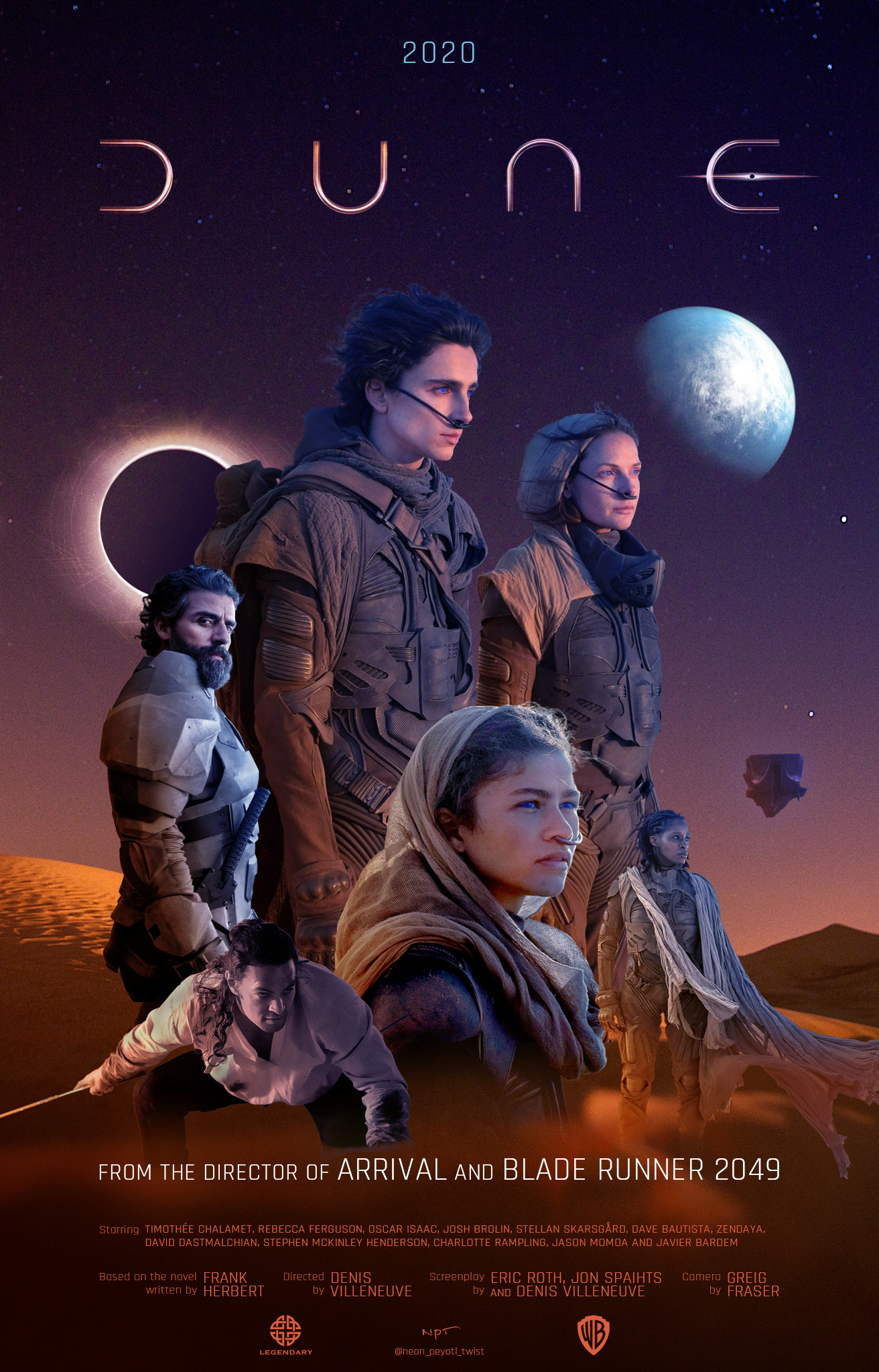
I had the opportunity to watch the movie Dune, directed by Denis Villeneuve, and so the following is a review based on my impressions of this film. I have read the Dune books and I have been reading all kinds of Science Fiction material since I was a child with my main interest in the hard-science fiction and space opera type. So, my review is not that of a professional movie reviewer or a casual cinema goer but that of a person who loves quality Science Fiction with a deep knowledge of this type of literature. Also, I must disclose the fact that I have no interest in comics-based adventures, which have been flooding the cinema screens, or popcorn sci-fi movies and TV series written by generic Hollywood writers for the purpose of making easy money. Dune is a superb and classic Science Fiction book and so my review is not about the story itself but this latest attempt to make a movie based on the first part of this book.
Most of the reviews I have read complain about the fact that this movie ends in a way which does not provide the satisfaction and completion that a viewer expects to have by the end of a typical adventure movie, since it only covers half of the book. I am not concerned about that since it was well known from the beginning that the movie covers the first half of the book and so I will not talk about issues related to the decision to make two movies instead of one or even more, as some people have suggested. Having read the book, I was not expecting to see something spectacular in terms of events at the end of the movie and so I was not upset or dissatisfied by the part of the story the director chose to end this movie. Of course, I would have preferred for the second movie to be already shot and available for showing but the production company decided not to risk spending more money in case this movie is not a commercial success and does not manage to recover its substantial cost.

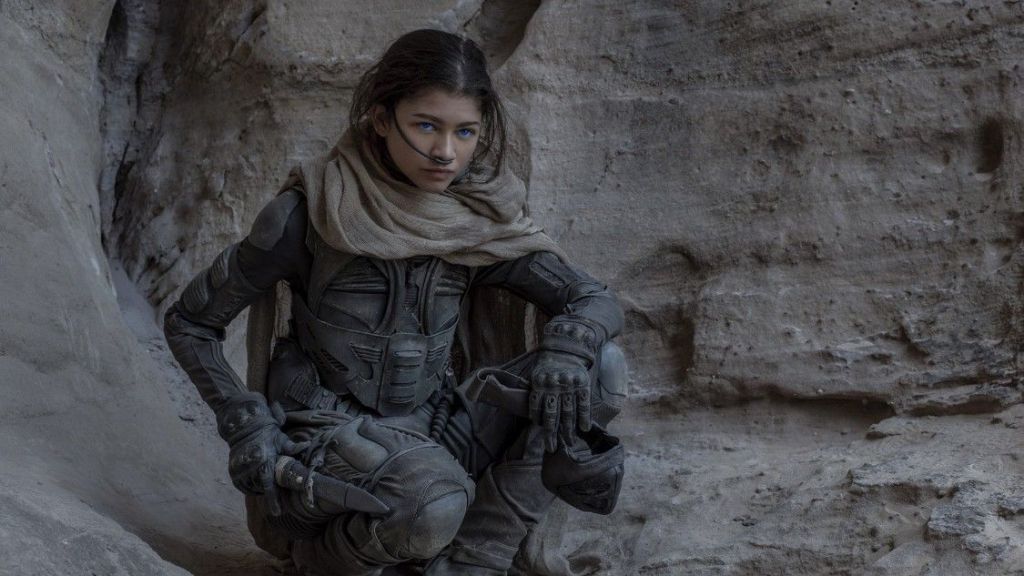
In terms of visual presentation, the movie is very impressive. All technological elements described in the book appear in the movie in a large and overwhelming scale. The same applies to the views we get of planet Caladan and the castle of House Atreides, the capital of Giedi Prime which is the home of House Harkonnen, the city of Arrakeen on Dune, which is also the seat of power for the current overlords of the planet, and of course the endless sands of the desert. The costumes are convincing and compatible with the book descriptions while the interiors of the buildings have detailed decorations, moody lighting and they are spacious.
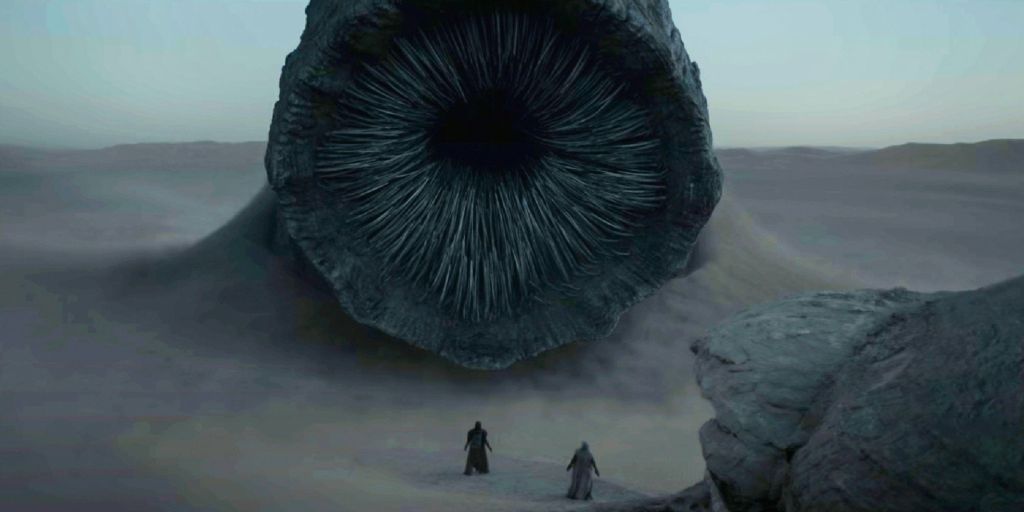
The design of the Guild Highliners is different compared to the 1984 movie and the enormous size of these vehicles is made apparent in a beautiful scene where a large number of small vehicles appear to exit a Highliner over Arrakis which are barely visible, like mosquitos flying close to a large whale. Unfortunately, in this movie we do not get to see the interior of these vehicles or the Guild Navigators who pilot them. We also do not see the Emperor, a character of immense importance in the story.

From a technical perspective, what I found most impressive was the design of the ornithopters, the small flying vehicles used to travel on Dune. The book describes them as having wings which flap like the wings of birds giving them the ability to both fly and hover. However, in the movie they chose to design them based on insects which I think was an excellent choice. They have eight wings, which look like the blades of a helicopter, and they vibrate at a high frequency mimicking the way the wings of a typical insect work. This gives them the ability to take off and land like helicopters, fly like planes and at the same time be able to switch the engines off, retract the blades close to the body and then perform a quick dive. This idea was a smart choice, and the result looks more realistic and convincing than the concept of flapping wings. At the same time, the lack of computer technology, as described in the book, is evident since everything is under manual control with sticks and knobs. This is an important aspect of the story which was also captured with accuracy by the director.

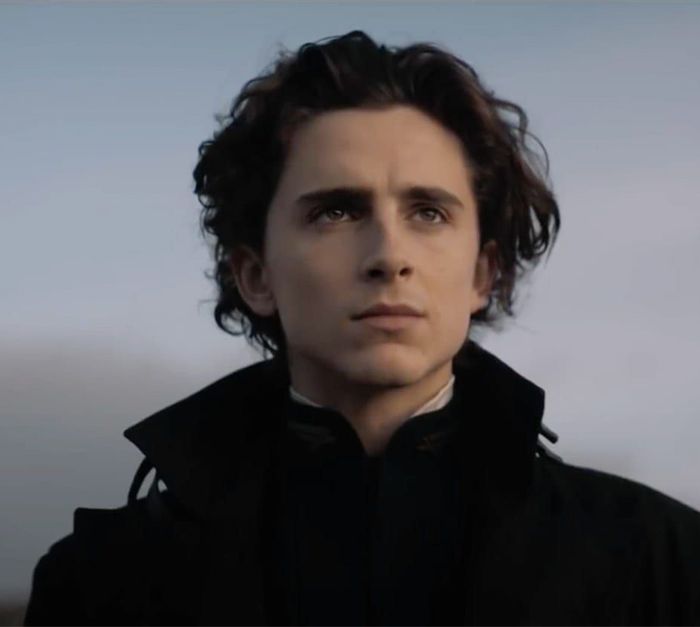
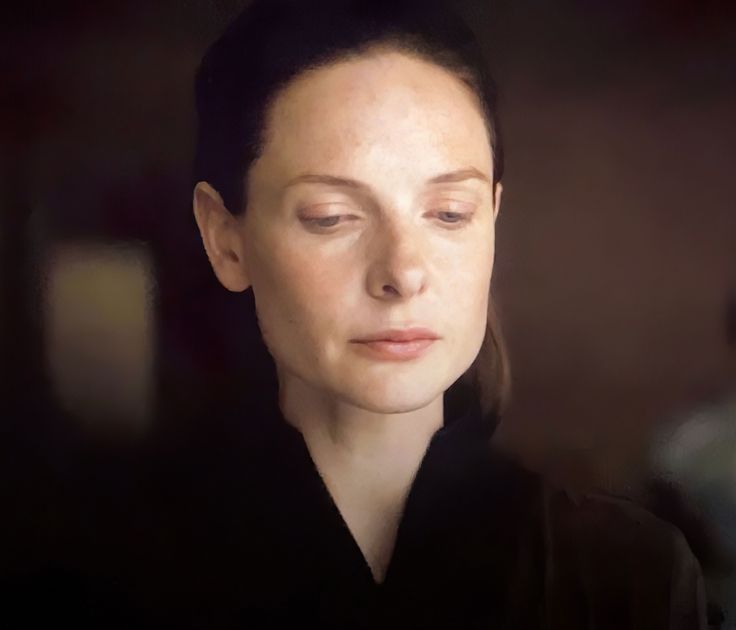
The visuals and the special effects are of high quality while the storyline follows very closely the book with certain omissions which can be justified by the need to keep the duration of the movie to a reasonable length. The actors chosen to portray the main characters of the story did an excellent job, particularly the Paul Atreides and Lady Jessica characters performed by Timothée Chalamet and Rebecca Ferguson, respectively.
However, impressive visuals and good actors are not enough to make a movie great, especially when the source material is a book like Dune. The book has a specific writing style which involves three major components: detailed descriptions of the environment that events take place, intelligent and short dialogue between characters and long monologues which reveal the thoughts of the characters. It is these three elements which Frank Herbert expertly uses to build the Dune Universe with its various cultures and the political machinations of the Great Houses and the Emperor. The monologues of the characters’ thoughts, in particular, are those which reveal their feelings and personality and therefore the reasons behind their actions. Unfortunately, this is something that we do not see in the movie.
The dialogue is minimal and we do not get to hear the thoughts of the characters. As a result, the protagonists appear as flat, unrealistic and mostly uninteresting. This is especially the case for the supporting characters of the book. We never see Gurney Halleck play the baliset and the limited time that he appears on screen he is in a training session with Paul in a beautiful choreography but without much context. Thufir Hawat delivers a line about some computations he performed in his mind and his other scene is when asking to be dismissed from duty because he failed to protect Paul when an attempt was made to assassinate him.
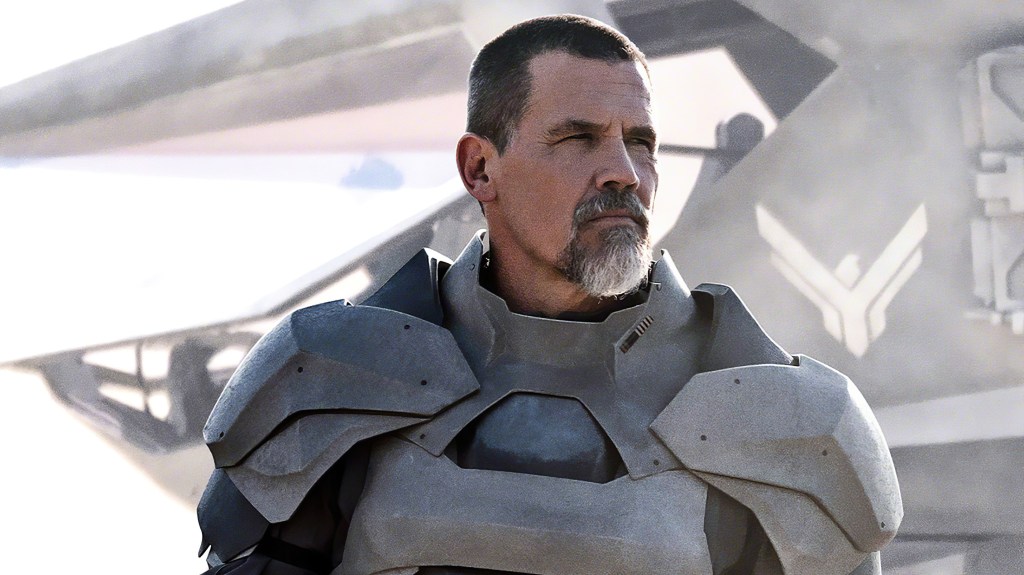
Chani is seen in a few unnecessarily repetitive dream sequences and in a scene just before the end of the movie, talking with an American accent in complete contrast to the Spanish accent of Stilgar who appears in only two scenes with extremely limited dialogue. It is a pity that the director chose capable and well-known actors for roles with only a few words to say, in contrast to the book. The richness of the emotions and thoughts of the Dune characters and their complex personality are absent from the movie. This makes the movie unengaging and unemotional to the viewer as if this is a story about wars between soldiers and spaceships, like all the other so-called sci-fi movies that Hollywood has been producing since Star Wars, commercial products guaranteed to attract young people who enjoy great visuals designed to sell tickets. Dune is not that kind of story. It has great characters to the point that it could very well be made into a theatrical production leaving the impressive visuals to the imagination of the viewer without losing anything of substance. Dune is all about these long monologues of thoughts which give the book the texture and richness which made it a classic piece of literature in the first place. And the director certainly had the time, two and a half hours of it, to build these characters to the level they appear in the book and so give this movie a soul. I would dare to say that despite of all of its faults, the 1984 version of Dune, had more character, soul and majesty in this respect.
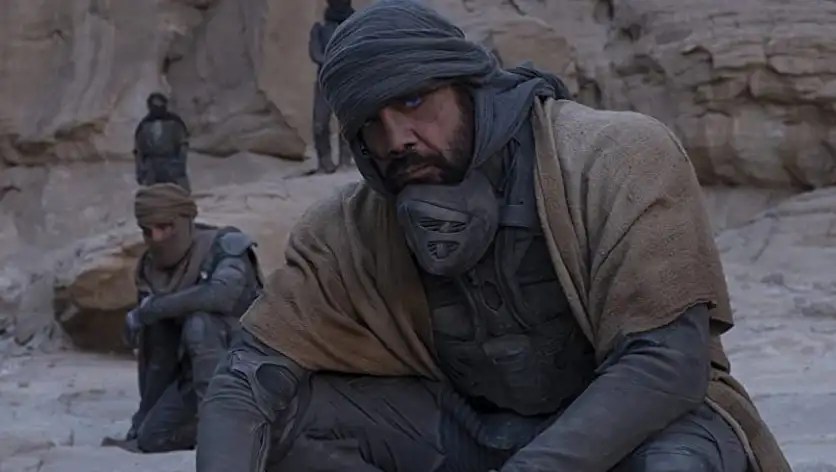
A major disappointment for me was the portrayal of Baron Harkonnen where again we see him in a limited number of scenes, those we can also see in the trailer, his dialogue is extremely limited and quite different and uncharacteristic of his personality as portrayed in the book. I think that the best Baron Harkonnen we have seen was that of Ian McNeice in the TV series with the title Frank Herbert’s Dune, a remarkable attempt to create a miniseries out of the book only limited by the available budget.

The Baron is a red-haired talkative egotistical flamboyant and pompous character with a lot of irony in his speech, capable of having fun with the cruellest actions one can imagine. The Baron of this movie is a man of very few words who reminded me the character of Colonel Walter Kurtz in Apocalypse Now as portrayed by Marlon Brando instead of the Baron as described in the book.

However, the portrayal of the Reverand Mother Gaius Helen Mohiam, played by Charlotte Rampling, is superb and the scene in the beginning of the movie where she tests Paul was very well made, although I consider the performance of Dame Jane Elizabeth Ailwên Phillips in the 1984 version of Dune to be simply divine and beyond any comparison. Doctor Yueh, who speaks with a Chinese accent, also has a limited time on screen.
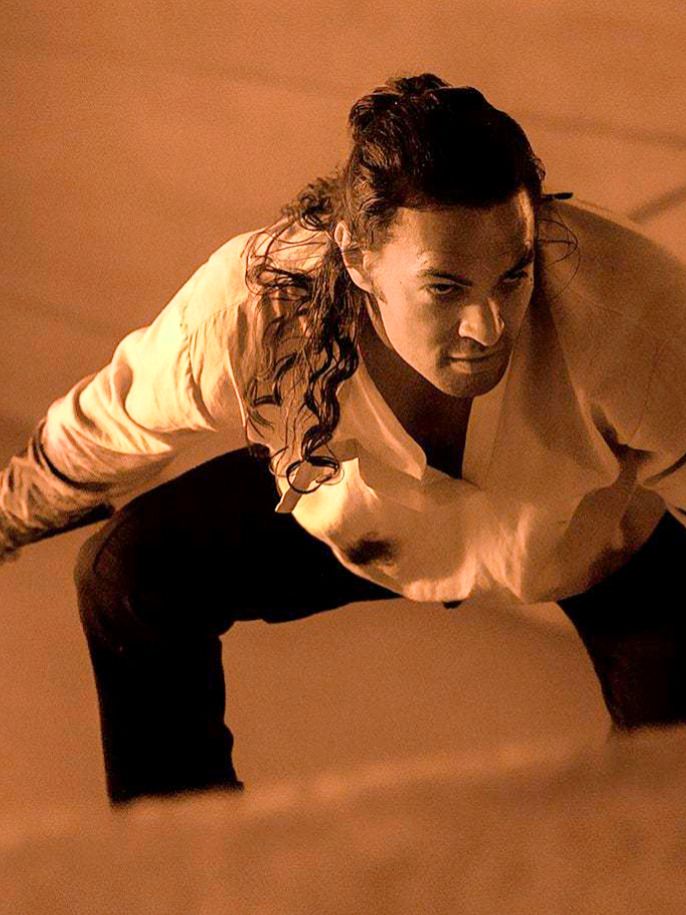
The character of Duncan Idaho, as portrayed by Jason Momoa, is convincing with more scenes than the other characters and a well-shot dramatic end. Duke Leto, as portrayed by Oscar Isaac, was also convincing but we never had the opportunity to see his relationship with Lady Jessica to the level that it would establish the love they had for each other and therefore justify her pain when she realised he was dead. I think that the requirement of the movie to receive a 12A certification so that children can watch it made a difference by having to remove scenes which in my opinion would make an impact such as the killing of Doctor Yueh, a love scene between Leto and Jessica and the cruelty of the Harkonnen. Dune is not a book for 12-year-old children because it is not about action and shooting but about characters, politics, cultures, ecology, rebellion etc. Dune is not Star Wars.
Perhaps, the lack of dialogue was done on purpose for the movie to be more suitable and engaging for young people and the huge Chinese market because the cinema industry suffered great financial losses due to the coronavirus pandemic and it needs to recover. But then again Hollywood was never particularly interested in cinema as a form of art but rather as a product to sell to the maximum number of people around the world for profit. And a movie with an estimated cost of 165 million dollars needs to sell a lot of tickets before it can be considered a good financial investment. Especially when there is a Part 2 to be filmed.

I hope that we do get to watch the second movie and that this time the director will address these issues making a movie with more substance which can emotionally engage not just children but adults who can genuinely appreciate all the qualities of this masterpiece of a book.

 Prometheus Unbound