Dune is one of the best science fiction books ever written, a modern classic, the winner of the prestigious Hugo and Nebula awards, translated in many languages and sold in million copies around the world.

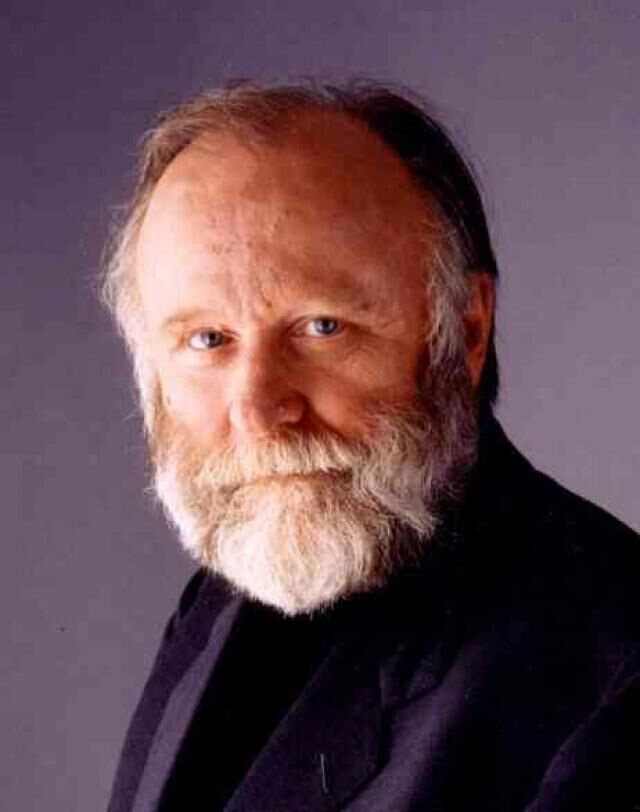
It was written in 1965 by American author Frank Herbert, originally published as two separate serials in Analog magazine and it was then followed by several more books which continued the story. A movie, based on the book, was made by director David Lynch in 1984 but it was not successful, mainly because of the size and complexity of the book which is impossible for someone to properly present in a single movie. However, in my opinion, this movie reproduced the aesthetics of the book with accuracy and some of the scenes and performances still remain in memory today after so many years. A new movie is soon to be released, this time based on the first half of the book, directed by Denis Villeneuve and based on the released trailers it looks like a masterpiece of cinematic beauty, accurately capturing the unique landscape and storyline of the book. But that remains to be confirmed!
What makes Dune so unique? According to the background story that establishes the Universe where the story of Dune unravels, thousands of years in the past, Humanity escaped the confines of Earth and created a civilisation which spanned many different star systems. It accomplished that by using advanced technology and in particular Artificial Intelligence (A.I.) which eventually became independent and it took over control of the human worlds. Humans became slaves of Thinking Machines but after many years of struggle they managed to free themselves by destroying the machines.
Of course, this is a storyline used by many other science fiction books and movies such as the Terminator series but the difference with Dune is that it explores the society created after the destruction of these machines and how the fear of A.I. affected its development. So, in Dune we are told that all computers with a high level of sophistication are banned by law and as a result the technology as well as the people had to adapt accordingly. One could then imagine a return to primitive times but this is no longer possible because there is already an established multi-planet civilisation which requires a high level of technology for communication, travel, trade and even survival. And so, in Dune we see something unique in science fiction worlds: the existence of high technology such as advanced spacecraft, energy shields, beam weapons etc. which do not incorporate advanced computer systems and their operation depends on the skills of the people who utilise them. At the same time, we see the development of human mental abilities beyond the normal levels as a way to compensate for the lack of computing devices. These abilities were developed by specific schools or institutions which in time obtained great power and influence.
One such school produces Mentats, humans with the ability to store in their minds huge amounts of data which they can process like computers manage databases. They also possess the cognitive ability of perception, which combined with data analysis of the information they have accumulated over time allows them to make educated guesses about future events based on specific actions and come up with strategies and tactical plans. The Benne Gesserit school is a group of women trained in the precise control of their emotions and body functions who operate as spies, scientists, genetic manipulators and political advisors hidden under the veil of a pseudo-religious organisation. And then we have the Guild Navigators, who are able to use a mentally conditioned and trained form of prescience to safely navigate interstellar and galactic space in long-range starships by folding space-time.
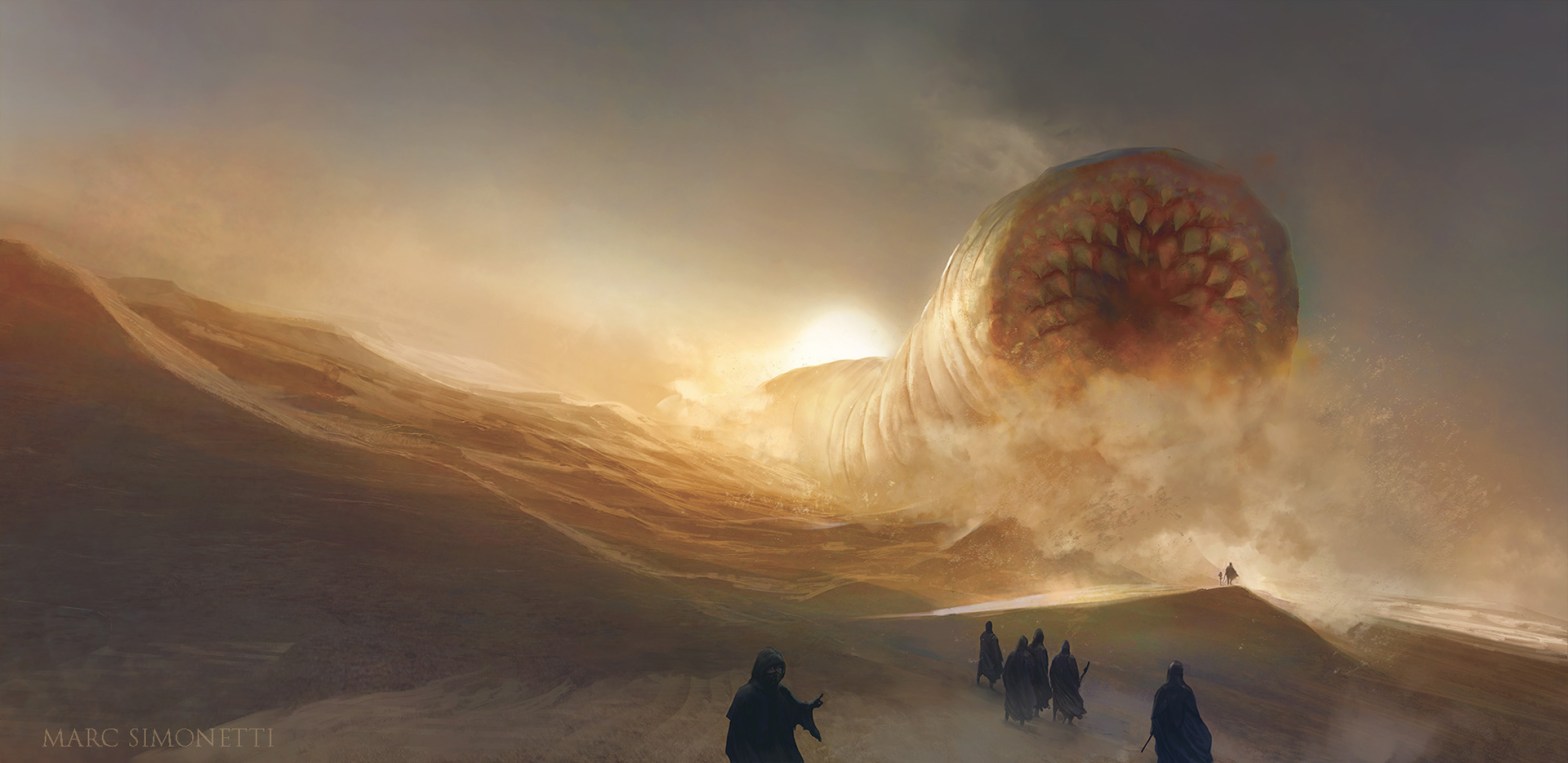
On top of this uniquely designed Universe, Frank Herbert designed a feudal society composed of many different planetary systems each ruled by a noble house. The Great Houses, together with other powers like the schools mentioned above, form a type of federal union called the Landsraad overseen and ruled by an Emperor, the head of House Corrino. This is the general framework of Dune used by the author to describe in great detail the Byzantine political machinations of the various centers of power to gain access to the most valuable substance in the Universe, the spice melange which only exists on the desert planet of Arrakis, also known as Dune. The spice is a naturally produced and extremely addictive narcotic which extends life and enhances mental abilities while it forms a fundamental block of commerce and technological development in the Universe. It also plays an important role in travel and cultural development as it is vital for space travel by enabling the Guild Navigators to safely guide spaceships through folded space-time. The extraction of spice from the deserts of Arrakis is very difficult and dangerous because of the presence of huge worm-like creatures, the sandworms, which are extremely territorial and ready to destroy any machinery that disturbs the sand. Water is so scarce that whenever its inhabitants go outside, they must wear stillsuits, close-fitting garments that capture body moisture and recycle it for drinking.
Dune is also the home of the Fremen, a collection of technologically primitive tribes of people who have exceptional skills of survival having to grow up in the harsh environment of the deserts where water is scarce while being in continuous conflict with outsider forces and interests which rule the planet with violence for the purpose of extracting the spice. In complete secrecy, the Fremen are engaged in a plan to transform the environment of Arrakis to a green and water rich planet with the use of various ecology transforming methods which the book describes in great detail. The creation of the Fremen culture was greatly influenced by the Bedouins of Arabia even at the level of their traditions and language. However, the main difference with the Bedouin culture is that Fremen women are strong and they share the active and fighting life of the men. An important part of the Fremen culture is their religion which promises them the appearance of a Messiah, a leader who is going to free them from foreign intervention and transform their planet to a rich water paradise. However, this belief appears to be implanted into their culture by missionaries of the Benne Gesserit school and on purpose as part of their eugenic plans and as a way to control the population, a common characteristic of all religions. The Fremen have strong moral beliefs and traditions and they are not presented in the book as an ignorant and primitive mass to be civilised.
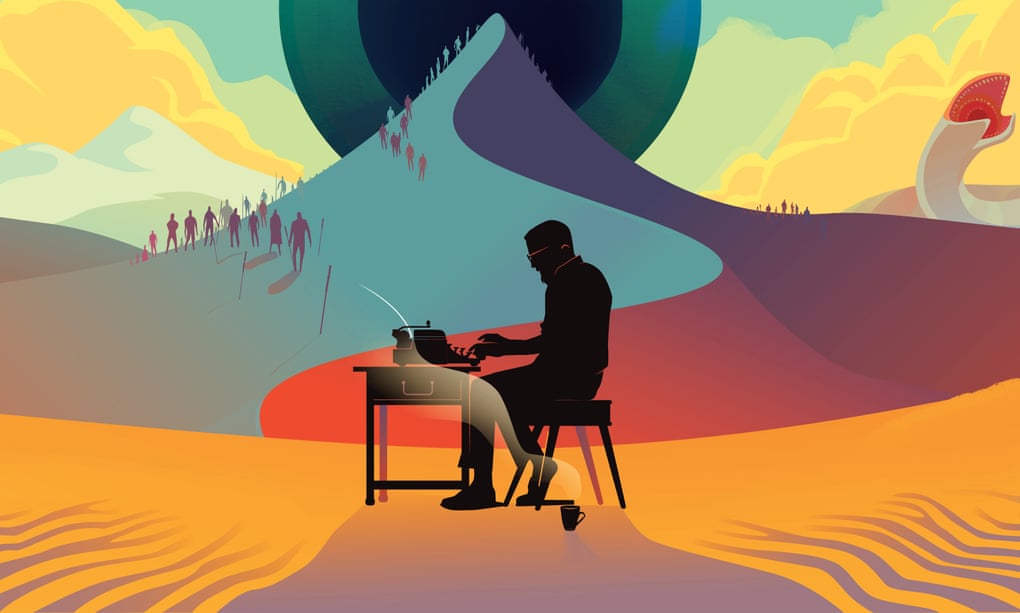
The book follows the life of the heir of House Atreides, the son of Duke Leto Atreides, Paul. He is the unexpected, yet successful, end result of the Benne Gesserit genetic plans and he becomes the Messiah the Fremen waited for so long to lead them to freedom. Paul is the main hero of the book but again Frank Herbert breaks the traditional rules and in the books that followed Dune he describes the harm that such a Messianic leader with great power and a fanatical religious following can do to the world. After the destruction of his family by their enemies, House Harkonnen, Paul finds refuge among the Fremen and so the book describes his growing up as he participates in the their culture and is finally transformed to a powerful political and religious leader who unleashes the Fremen war machine that will give an end to the corrupt and oppressive rule of the Emperor Shaddam IV and his legions of the elite Sardaukar soldiers.
In Dune, Frank Herbert explores and mixes many different subjects such as ecology, environmentalism, religion, the Messiah myths, the decline of empires, the future of technology, science, genetics, gender dynamics, mind altering drugs, political systems and corruption, anthropology, physical and mental training, the clash of different cultures, psychology, human emotions and desires, power structures and many more. The scarcity and the need for the spice melange is a metaphor for today’s situation with oil, the wars to obtain oil fields and the shortage of resources because of overpopulation. The author is concerned with environmental stress, human potential, altered states of consciousness and the developing countries’ revolution against imperialism.
It is very rare for a book written so many years ago to still be relevant in today’s world with ideas and thoughts of importance and relative to current events as we face the problems of global warming that affects the environment and the ecology of our planet in combination to the population explosion and the need for more resources. Dune is a masterpiece of world building and culture creation. I hope that the new movie does justice to this amazing book and I intend to return to this subject after watching the movie with my review.

 Prometheus Unbound