
I can think of two main reasons for the emergence of religion and supernaturalism in primitive people, both based on mechanisms developed in the human brain by the process of evolution through natural selection:
Looking for Agents: Suppose you are in a jungle and you notice some strange signs in the area you live, such as multiple small depressions on the ground, dead animals with open wounds and missing parts, peculiar sounds of unknown origin etc. You can either ignore these signs or consider them to be natural phenomena that you cannot understand. Alternatively, you can interpret them as a result of an agent, some kind of living creature which walks on the ground, hunts and eats animals while producing all sorts of noises which reveal its location. Clearly, a person who looks for an agent is more likely to survive an encounter with a flesh eating animal or some other threat because he will prepare himself for such an event or perhaps even start a hunt of his own to eliminate the threat before he gets into trouble. On the other hand, a person who ignores these signs or interprets them in some other manner is less likely to survive the encounter. It therefore makes sense for evolution to favour the development of the brain mechanism which looks for agents to explain such events because this behaviour improves the chances of genes to survive and spread. However, the human brain is not a perfectly working processing device, despite what many people think, because it can be easily fooled. A misfiring of this mechanism can make people imagine non-existing agents for events that cannot be easily explained by the currently accumulated knowledge and experience. Events like heavy rain, lightning and thunderstorms can then be explained as God’s wrath. Tsunamis can be attributed to gods or monsters of the sea. The result of war campaigns can be attributed to the preferences of the gods and affected by sacrifices and praying. Even today, many people cannot accept the fact that the biosphere of this planet and in particular the human brain can be the result of natural and seemingly random chemical processes that are not guided or designed by some supernatural, powerful and usually loving entity, even when Science explains and provides evidence that does not include a supernatural agent.
Seeking a Purpose: It is very hard for people to accept the fact that a lot of times things happen for no particular reason or ultimate purpose. Similarly, people find it very difficult to explain the existence of objects in the physical world which seem to serve no particular function. Seeking purpose to events and objects is another mechanism built into the human brain that provides evolutionary advantages for the survival of the genes. When faced with particular events it is certainly to one’s advantage to contemplate whether there is some hidden purpose behind them and as a result avoid traps, such as a hunting animal or the war plans of another tribe. Furthermore, this mechanism can provide comfort and reduce stress and anxiety when terrible events happen by either realising or imagining that there is an ultimately good purpose behind these events after all. This mechanism is the basis for human curiosity and therefore the development of Science that can improve the quality of life and the survival of the genes. Unfortunately, as with the case of agent seeking, a misfiring of this mechanism can lead to the creation of imaginary purposes to explain events when knowledge is not available, even in cases when events happen or objects exist for no ultimate purpose. So, a person explains the purpose of death as the road to eternal life, which is surely a comforting thought. He explains the purpose of life as a test for the obedience of people to God’s wishes and commands, which I personally find absurd. He explains the death of a child as God’s wish for some reason that human beings cannot comprehend but it must be a good one because God loves people.
It is important to recognise these mechanisms for what they are: beneficial but potentially harmful. They should be utilised for our benefit but always watch out for problematic applications.
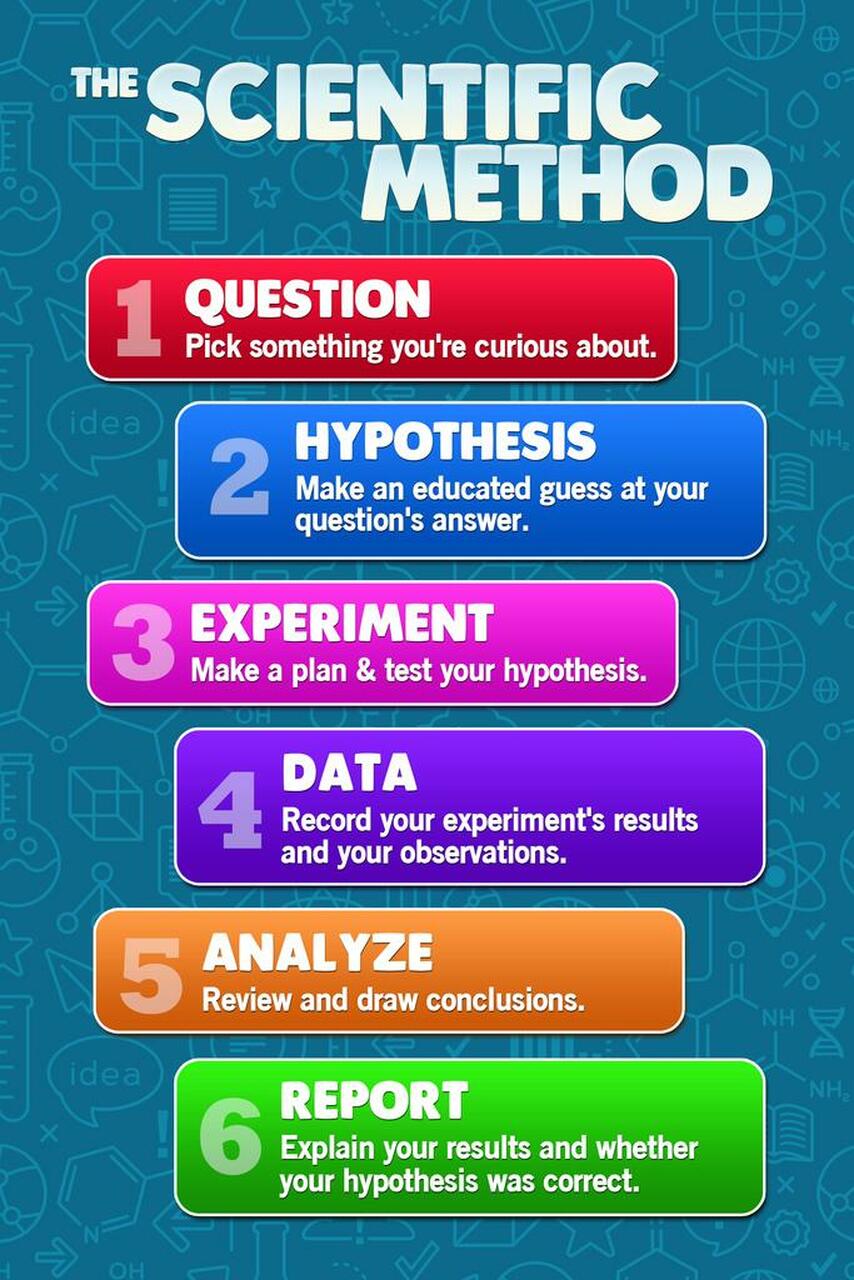
Critical thinking, and in particular the Scientific Method, is essentially an error correction mechanism that we developed in order to utilise the resources and capabilities of the human brain while correcting for errors due to imperfections from the misfiring of brain’s processes. It is an algorithm that once employed can discard erroneous conclusions, superstitions and magical thinking. Different people have different brains and they can produce different conclusions for the same input data. In order to correct for errors, the Scientific Method requires the following:
- One presents a clear description of a reproducible process that led to certain results and conclusions.
- One makes available objectively verifiable evidence that supports these results and conclusions.
- Any other person can duplicate the results and reach the same conclusions by following the same process and examining the provided evidence.
In practice, the Scientific Method has worked perfectly well and unless evolution through natural selection ultimately leads to the development of a perfect and error free biological brain in the far future, this method will remain the only reliable way for Man to make sense of the world and its mysteries.

 Prometheus Unbound
For an answer to this check “Man Lives within a Mythological Universe” Book talk at chat3.uk
LikeLike